
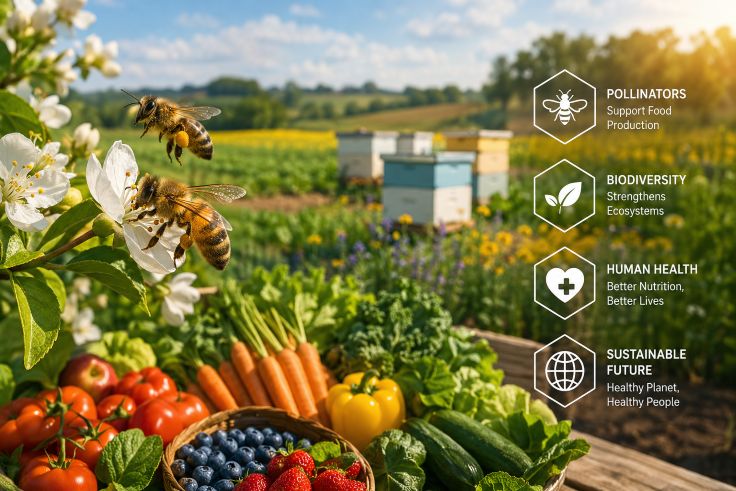
Pollinators support roughly 75% of the world’s flowering plants and about 35% of global food crops, based on findings published by the Food and Agriculture Organization of the United Nations (FAO). Bees play a central role in maintaining food production, biodiversity, and ecosystem balance. Their activity influences the availability of fruits, vegetables, nuts, and seeds that contribute to healthy human diets. As bee populations face increasing pressure from environmental changes, scientists and public health experts continue studying what these shifts reveal about environmental wellness and long-term nutrition security.
Research organizations, agricultural laboratories, and environmental monitoring groups use testing tools and analytical resources to better understand pollinator health and ecosystem quality. Providers such as Herbilabs supplies support laboratory workflows connected to environmental analysis, agricultural testing, and scientific monitoring. These systems help researchers evaluate contamination levels, pesticide exposure, soil conditions, and other environmental factors that can affect bee populations and food systems.
How Bees Connect Environmental Health and Food Systems
Bees contribute far more than honey production. They help pollinate crops that form the foundation of balanced nutrition. Apples, almonds, blueberries, cucumbers, avocados, and many leafy vegetables depend heavily on pollination. When bee populations decline, agricultural productivity and crop diversity can also suffer.
The United States Department of Agriculture (USDA) notes that pollinators are essential to stable food systems because they increase crop yields and improve the quality of produce. Pollination supports seed development, fruit size, and overall plant reproduction. Healthier pollinator populations often correlate with stronger agricultural ecosystems.
Environmental wellness becomes closely tied to human nutrition through this relationship. Diverse ecosystems support diverse diets. When ecosystems weaken, food systems can become more dependent on a narrow range of crops. This may reduce nutritional variety and create vulnerabilities in agricultural supply chains.
Research published by the Intergovernmental Science-Policy Platform on Biodiversity and Ecosystem Services (IPBES) highlights that pollinator decline threatens food security in many regions worldwide. Reduced pollination can affect access to micronutrient-rich foods such as fruits and vegetables. These foods provide vitamins, minerals, antioxidants, and fiber linked to overall health.
Bee Health as an Environmental Indicator
Scientists often view bees as biological indicators of environmental conditions. Their sensitivity to pollution, pesticides, habitat loss, and climate changes makes them valuable for understanding ecosystem stress.
Data collected by the United States Environmental Protection Agency (EPA) shows that exposure to certain pesticides may affect bee navigation, reproduction, and colony survival. Agricultural runoff, industrial pollutants, and poor land management practices can further disrupt pollinator habitats.
Bee populations may also reflect broader environmental shifts that impact humans. Air pollution, water contamination, and declining plant diversity influence both pollinator survival and public health outcomes. Environmental monitoring programs frequently examine these interconnected risks together.
Habitat fragmentation presents another challenge. Urban expansion and intensive farming reduce the availability of flowering plants and nesting areas. Research from the University of Reading found that landscapes with greater plant diversity tend to support healthier bee communities. These same environments often provide ecological benefits such as improved soil quality and stronger carbon storage.
Climate change adds another layer of complexity. Temperature shifts can alter flowering seasons and disrupt pollination timing. If plants bloom before pollinators become active, food production may decline. Scientists continue studying how changing weather patterns affect pollinator migration and reproduction cycles.
Why Crop Quality Depends on Pollination
Pollination influences more than crop quantity. It also affects nutritional quality and market value. Studies published in journals supported by the National Institutes of Health (NIH) suggest that well-pollinated crops often develop more evenly and may contain improved nutrient profiles.
For example, some research indicates that pollination can affect the concentration of certain vitamins and beneficial plant compounds in produce. Better pollination may also improve texture, shelf life, and seed formation. These outcomes matter for both consumers and agricultural economies.
Reduced pollinator activity can create ripple effects across food systems:
- Lower crop yields
- Reduced food diversity
- Higher agricultural costs
- Increased dependence on manual pollination methods
- Potential nutritional shortages in vulnerable communities
The World Health Organization (WHO) has emphasized the importance of fruit and vegetable intake in reducing risks associated with chronic diseases. Since many of these foods depend on pollinators, bee health indirectly connects to broader public health outcomes.
Laboratory Testing and Environmental Monitoring
Modern environmental science relies heavily on laboratory analysis to track ecological changes. Researchers monitor soil quality, pesticide residues, water contamination, plant health, and bee colony conditions using specialized testing equipment and analytical systems.
Environmental laboratories often examine:
- Pesticide concentrations in crops and soil
- Heavy metal contamination
- Microbial activity in ecosystems
- Water quality near agricultural zones
- Plant nutrient composition
- Bee colony disease patterns
These monitoring efforts help scientists identify environmental stressors before they create larger agricultural or public health problems. Research published by the Centers for Disease Control and Prevention (CDC) supports the value of environmental surveillance in detecting contamination risks tied to food production systems.
Testing tools used in laboratories also help improve transparency within food systems. Agricultural producers can evaluate how environmental practices affect crop safety and sustainability. Scientists can compare regional environmental conditions and identify long-term ecological trends.
Pollinator research increasingly combines environmental science, agriculture, nutrition, and public health. This interdisciplinary approach allows researchers to better understand how ecological disruptions influence human wellbeing.
Biodiversity and Sustainable Nutrition
Biodiversity supports resilience in both ecosystems and food systems. A wider range of plant species helps maintain pollinator populations, while pollinators help sustain plant reproduction. This cycle strengthens agricultural stability over time.
The Convention on Biological Diversity has reported that biodiversity loss affects food security, clean water access, and disease resistance. Pollinator decline represents one visible sign of these broader environmental pressures.
Sustainable nutrition depends on maintaining balanced ecosystems capable of producing varied and nutrient-rich foods. Experts in environmental health increasingly encourage farming practices that protect pollinator habitats while reducing harmful chemical exposure. Research exploring bioactive compounds found in pollinator-supported ecosystems continues to highlight how plant diversity, bee activity, and natural food chemistry are closely connected to long-term human wellness and ecological stability.
Several agricultural strategies support pollinator-friendly ecosystems:
- Planting flowering buffer zones
- Reducing excessive pesticide use
- Encouraging crop diversity
- Protecting native vegetation
- Improving soil conservation practices
Research from Harvard T.H. Chan School of Public Health suggests that sustainable food systems may help reduce long-term health risks while supporting environmental resilience. Pollinator protection remains part of these broader sustainability discussions.
What Bee Populations Reveal About Human Health
Bee population trends offer valuable insight into environmental conditions that eventually affect human communities. Pollinator decline may signal ecological imbalances tied to pollution, habitat degradation, climate stress, or unsustainable agricultural practices.
Environmental wellness and human nutrition remain deeply connected through food systems. Healthy ecosystems contribute to stable crop production, stronger biodiversity, and improved nutritional access. Pollinators serve as one of the most visible indicators of how environmental conditions influence these outcomes.
Laboratory testing, scientific monitoring, and agricultural analysis continue helping researchers better understand these relationships. Environmental research tools, analytical resources, and scientific supply systems support ongoing studies focused on protecting ecosystems and improving long-term food sustainability.
As scientists continue examining pollinator health, the findings extend beyond agriculture alone. Bee populations provide insight into how environmental quality, biodiversity, and nutrition intersect. Their role within ecosystems reflects a broader lesson: maintaining environmental balance supports healthier food systems and healthier communities over time.